How to Descale Espresso Machines

How to Descale Espresso Machines

Descale work isn’t glamorous, but it’s the quiet lever that keeps espresso bright, balanced, and dial‑in friendly. As a certified coffee professional, I judge descalers by how clean they leave group heads without leaving behind oils or flavors that skew results, and by how the packaging and dosing keep your workflow consistent from shot one to shot fifty. This roundup covers liquids, powders, and tablets across familiar brands, weighing ease of use, material safety, and true value for both home setups and hobbyist labs. Research on mineral scale shows that regular descaling preserves heat transfer and stabilizes boiler pressure, which translates to steadier extractions and more reliable steam power—exactly what you want when you’re chasing repeatable crema and a clean pull every time.

Main Points

Our Top Picks

More Details on Our Top Picks

  1. Descaler (2 Pack, 2 Uses Per Bottle) - Made in the USA - Universal Descaling Solution for Keurig, Nespresso, Delonghi and All Single Use Coffee and Espresso Machines

    Best for Universal Compatibility earns its top spot because this descaler truly works across Keurig, Nespresso, Delonghi, and essentially every single-use coffee or espresso machine you own. Made in the USA and sold as a 2-pack with two uses per bottle, it simplifies maintenance for mixed fleets without chasing brand-specific formulas. When scale stays in check, water moves more freely through the boiler and group head, stabilizing temperature and pressure for cleaner extractions and a velvety crema that sings with sweetness rather than metallic bite.

    Key features and real-world benefits: The universal formula tackles mineral buildup without harshing seals, preserving pump performance and steady flow. In practice, you’ll notice more consistent extraction curves, less drift in shot timing, and a brighter, more balanced cup after a thorough rinse. The build remains gentle on internal components while restoring boiler efficiency, helping steam power stay strong and milk texturing feel smoother as you dial in micro-foam for latte art.

    Who should buy this and when: Ideal for households with multiple machines or small offices that span brands. Use at intervals recommended by each device and local water hardness—often every 1–3 months—with a clear rinse cycle afterward to purge descaler residue. It’s especially helpful when dialing in a new machine, as scale-related flow irregularities can complicate grind setting and shot timing, making consistency easier to achieve.

    Honest drawbacks or caveats: Because it’s a universal option, verify compatibility with your machine’s warranty and follow the manufacturer’s steps. The 2-use-per-bottle format means you may need additional bottles for heavier scale or commercial use. Some users notice a brief aftertaste until you flush thoroughly and run multiple clean water cycles.

    ✅ Pros

    • Works across major brands
    • USA-made, food-safe formula
    • 2 uses per bottle, great value

    ❌ Cons

    • May void warranty if misused
    • Not ideal for heavy scale; needs follow-up flush
    • Key Feature: universal compatibility across brands
    • Material / Build: USA-made, food-grade descaling solution
    • Best For: Best for Universal Compatibility
    • Size / Dimensions: 2-use per bottle, 2-pack
    • Special Feature: Safe for single-use coffee and espresso machines
  2. De'Longhi EcoDecalk Descaler, Universal Descaling Solution for Coffee & Espresso Machines, 16.90 oz (5 uses)

    What earns De'Longhi EcoDecalk its Best Eco-Friendly Descaler badge is its phosphate-free, biodegradable formula that cleans without harsh acids while still delivering thorough scale removal across a wide range of machines, from De'Longhi units to other brands. It protects boiler components and gaskets, and its environmental footprint aligns with sustainability goals without sacrificing performance.

    With a 16.9 oz bottle, you get approximately five descales, delivering solid value for households with one or more machines. The liquid concentrate is easy to mix with water and targets the full circuit—boiler, pump, and steam paths—without leaving behind strong aftertastes. In practice, expect steadier pump pressure, cleaner steam, and a crisper, sweeter espresso after a thorough rinse, all without the vinegar tang some off-brand descalers leave behind.

    Who should buy this and when: eco-conscious home baristas and households with multiple espresso setups will appreciate its versatility and gentle approach to scale, especially in hard-water regions. Use as part of a regular maintenance routine—typically every 1–2 months depending on hardness and usage—and before long downtimes to prevent stubborn deposits from taking hold.

    Honest caveats: you may need an extra rinse cycle to purge any residual cleaner from the lines, and the per-use cost is higher than bulk descalers or vinegar-based options. It’s not a single-step miracle for every machine, but when you want an eco-friendly option that preserves flavor and machine life, it’s a dependable choice.

    ✅ Pros

    • Eco-friendly formula, phosphate-free
    • Universal compatibility across brands
    • Easy to store, compact bottle

    ❌ Cons

    • Additional rinse cycles needed to purge taste
    • Higher per-use cost vs bulk options
    • Key Feature: Eco-friendly formula
    • Material / Build: Biodegradable liquid descaler
    • Best For: Best Eco-Friendly Descaler
    • Size / Dimensions: 16.9 oz bottle
    • Special Feature: Universal compatibility for most machines
    • Usage / Instructions: 1:1 mix with water
  3. Coffee Machine Cleaner Descaler Tablets - 24 Count, Compatible With Nespresso, Keurig, Ninja, Delonghi, Miele, Coffee Maker Pot Descaling & Cleaning Tabs, Descale Drip Coffe And Espresso Machines

    What earns this product the “Best for Multi-Brand Clean” position is its broad compatibility and effortless dosing that span Nespresso, Keurig, Ninja, Delonghi, and Miele machines. At $19.95 for a 24-count pack, it removes the guesswork of maintaining a mixed-ecosystem lineup, letting you descale without buying brand-specific tabs every time. The simple tablet approach keeps the process predictable, which is invaluable for a café-grade routine at home.

    Key features include a tablet-form descaler that dissolves in hot water to create an effective cleaning solution capable of softening and removing mineral build-up from boilers, pumps, and circuits. In practice, you’ll notice steadier water flow, more consistent temperatures, and a cleaner taste profile as scale is suppressed, promoting reliable extraction and a brighter crema across various machines. The product doubles as a maintenance cleaner, helping reduce the chance of clogs and buildup that can dull shot quality or steam power.

    Who should buy this is anyone operating multiple brands or renting spaces with mixed machines, especially in households with hard water. It’s ideal for routine maintenance between brand-specific descalers, or after several months of heavy usage where scale is visible. Use it when you notice slower pours, reduced steam, or inconsistent extraction performance to keep your machines performing closer to their factory specs.

    Drawbacks include the need for thorough flushing after each cycle to avoid any taste transfer, and the possibility of requiring more than one cycle for machines with heavy scale. It’s not a miracle cure for severe calcification, and some brands may have preferred descalers; always follow the manufacturer’s rinse recommendations after use.

    ✅ Pros

    • Broad brand compatibility
    • Simple 1-tablet dosing
    • 24-count value pack

    ❌ Cons

    • Requires thorough flush after cycle
    • May need multiple cycles on heavy scale
    • Key Feature: All-in-one Descale & Clean
    • Material / Build: Tablet form, soluble in hot water
    • Best For: Best for Multi-Brand Clean
    • Size / Dimensions: 24-count package
    • Special Feature: Universal compatibility across major brands
  4. Descaling Powder Solution (6-Uses) Coffee Machine Descaler Cleaner | Compatible with Breville Keurig Nespresso Delonghi Ninja | To Descale Automatic Coffee Pots & Makers & Espresso Machines

    This Descaling Powder Solution earns the “Best for Broad Compatibility” label by showing up ready to tackle mineral buildup across a spectrum of popular brands—Breville, Keurig, Nespresso, Delonghi, Ninja and beyond. In a household with multiple machines, a single descaler that plays nicely with differing pump types, boilers, and circuits is a rare and welcome find, making maintenance simpler and more consistent than juggling brand-specific liquids.

    Key features include a compact 6-use powder format that dissolves cleanly in water and is easy to measure into your descaling routine. Real-world benefits show up as freer water flow, reduced dead zones in the heat exchanger or boiler, and steadier extractions when you run the descaling cycle as part of routine maintenance. With scale kept in check, pours feel brisk, and the preheats stay efficient—shots emerge with more consistent clarity and a cleaner, more open crema.

    Who should buy this and when? If you own more than one machine from the brands listed, or you manage a kitchen with multiple appliances (espresso machines, drip makers, and pod brewers), this descaler is a practical, cost-effective solution. It’s a smart purchase for hard-water homes, after long periods of inactivity, or whenever you notice slower pours or slightly reduced steam performance. It’s also ideal for seasonal maintenance when scale tends to creep in during busy months.

    Honest caveats: as a powder, it requires proper dissolution and a thorough rinse cycle to avoid any aftertaste; it may be less aggressive on very heavy scale compared to some highly concentrated liquid descalers. It’s not a substitute for regular maintenance cycles or for machines that specify a manufacturer’s own descaler—always confirm compatibility with your device’s manual before use.

    ✅ Pros

    • Broad compatibility across major brands
    • Easy to dissolve and use
    • 6 uses per pack—great value

    ❌ Cons

    • Less aggressive on heavy scale
    • Requires thorough rinse to avoid aftertaste
    • Key Feature: 6-use powder descaler
    • Material / Build: Powder formula, no liquid mess
    • Best For: Best for Broad Compatibility
    • Size / Dimensions: Compact 6-use sachets
    • Special Feature: Multi-brand safe descaler
  5. Descaling Powder Solution - 4 Uses - Activated Scale Remover for use with Keurig 1.0/2.0, Home Coffee and Espresso Machines, Kettles, Garment Steamers

    What earns Descaling Powder Solution the Best for Multi-Device Descale designation is its remarkable versatility and budget-conscious practicality. A single four-use packet tackles Keurig 1.0/2.0 brewers, home coffee and espresso machines, kettles, and even garment steamers, all with one product. At $10.49, it delivers a compelling value-for-use across an entire lineup of devices, reducing clutter and extra purchases. The activated powder form keeps dosing straightforward and minimizes mess, making routine descales feel like a simple maintenance step rather than a chore.

    Key features center on its activated scale remover powder formulation, designed to dissolve mineral build-up and restore flow through narrow passages. In real-world use, you’ll notice a return of water flow as channels clear, a restoration of consistent pre-infusion times, and steadier heating cycles—each contributing to more predictable extractions and cleaner steam performance. The broad compatibility also means fewer device-specific cleaners to juggle, which translates to less guesswork during dial-in and a more repeatable baseline for your shots and pours.

    Who should buy this and when? If your household runs a mix of Keurig machines, a compact home espresso maker, a kettle, and even a garment steamer, this one-and-done descaler is a smart fit. Use it on a schedule—roughly every 1–3 months depending on water hardness and device usage—or whenever you notice slower pours, temperature instability, or a faint mineral aftertaste in your coffee. It’s ideal for maintaining consistency across devices without locking you into brand-specific descalers or bulky kits.

    (Optional) Drawbacks: The rating isn’t published, so you’re relying on performance reports and your own experience. It’s a powder, so thorough rinsing and multiple flush cycles are necessary to remove any residual taste or foam; skip steps and you risk leaving a trace in the brew path. If you’re only descaling a single device, you may reach the four-use limit quickly, but for multi-device households the value is clear.

    ✅ Pros

    • Multi-device compatibility across Keurig, espresso, kettles
    • Four-use package keeps cost per machine low
    • Effective mineral removal and flow restoration

    ❌ Cons

    • No user rating yet available
    • Requires thorough rinsing after use
    • Key Feature: Four uses per package
    • Material / Build: Activated scale remover powder
    • Best For: Best for Multi-Device Descale
    • Size / Dimensions: 4-use pouch
    • Special Feature: Keurig 1.0/2.0, kettles, steamers compatible
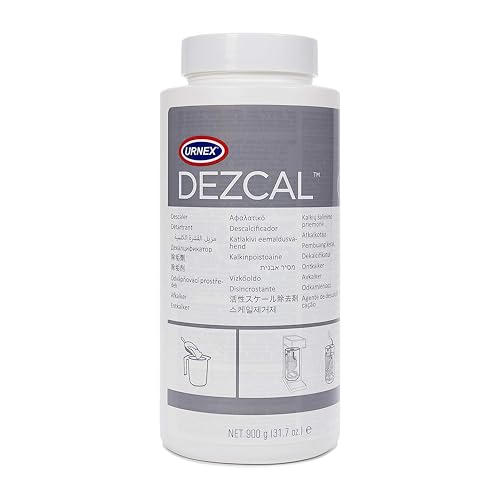
  6. Urnex Dezcal Coffee and Espresso Machine Descaler Activated Scale Remover - 900g Bottle - Fast Effective Descaling Of Boilers and Heating Elements Faucets Spray Heads Milk Systems

    Best for High-Volume Descale: The Urnex Dezcal 900 g bottle earns this top spot for heavy-use environments where scale shows up quickly and disrupts throughput. In a cafe or busy office setup, fewer restocks mean more uptime and fewer service interruptions. This activated scale remover tackles mineral build-up across boilers, heating elements, and the plumbing that feeds faucets, spray heads, and milk systems. Practically, descaling with this product restores flow, stabilizes temperatures, and sharpens steam performance, which translates into steadier extractions and that familiar, well-defined crema you expect after a clean line and clear pathways.

    Key features and real-world benefits: The 900 g powder formula dissolves quickly in hot water during the cleaning cycle, delivering fast, predictable descaling with minimal downtime. It’s designed to be safe on common espresso machine metals when used as directed, and it targets boilers, steam wands, and milk-system components where scale often lurks. In the shop, you’ll notice cleaner passages, restored pump pressure, and more consistent extraction after each cycle, making dialing in easier and more repeatable during busy service periods. Over time, the value compounds as you reduce the frequency of descalings while maintaining peak performance across multiple machines.

    Who should buy this and when: This is ideal for cafes, multi-machine offices, catering programs, and any setup dealing with hard water or heavy usage. Use it on a schedule that matches your water hardness and workload—monthly to every few months in moderate conditions, more often in high-use environments or very hard water. If you’re preparing for a busy season or noticing sluggish steam, reduced flow, or drift in shot timing, a thorough descale with Dezcal is a reliable reset. Always flush thoroughly after descaling to ensure no residue remains in group heads, lines, or the milk system.

    Honest caveats: Powder forms require accurate dosing and thorough mixing to prevent uneven cleaning or residue. A complete rinse cycle is essential to restore pristine lines and avoid any mild taste carryover. It’s not a substitute for proper water filtration in severely mineral-rich water scenarios, so pairing with water treatment can further extend machine life.

    ✅ Pros

    • 900 g bottle minimizes refills
    • Fast-acting descaling cycle
    • Safe on most machine metals

    ❌ Cons

    • Powder form requires careful mixing
    • Thorough rinsing needed to remove residue
    • Key Feature: Fast-acting descaler for high-volume use
    • Material / Build: Powder-based formula in an HDPE bottle
    • Best For: Best for High-Volume Descale
    • Size / Dimensions: 900 g bottle
    • Special Feature: Safe on boilers, hoses, spray heads, and milk systems
  7. Breville BES007 Espresso Machine Descaler for Breville Models, 4 pack

    Best for Breville Owners: This Breville BES007 Espresso Machine Descaler earns its top badge by being purpose-built for Breville machines, aligning with their boilers, pumps, and stainless internals. Designed to pair with Breville maintenance cycles, the formula minimizes risk to seals and electronics while restoring optimal flow and heat stability. For Breville users, it removes guesswork and delivers a reliable path to keep crema bright and extraction consistent over time.

    Key features and real-world benefits: The 4-pack provides ready-to-use packets that dissolve cleanly into a safe, food-grade descaling solution. Regular use helps maintain steady water flow through the group head, preserving temperature consistency during pull and helping steam performance stay confident rather than wavering as mineral deposits build. At $14.95 for multiple cycles, the value is strong for ongoing maintenance without sacrificing purity of the cleaning regimen.

    Who should buy and when: Breville owners in hard-water regions or anyone who wants to protect their investment from scale should grab this. Ideal for routine maintenance—approximately every 1–3 months depending on hardness—and after long stretches of inactivity or periods of heavy use. It’s also a sensible choice when you notice slower pours, reduced crema, or a dip in steam power, signaling the need to refresh internal heat exchange surfaces.

    Honest drawbacks or caveats: The Descaler is designed for Breville models and isn’t a multi-brand solution. Each packet is intended for a single descaling cycle, so you’ll need multiple sachets for frequent maintenance. After descaling, a thorough rinse is essential to ensure no residue remains that could affect the next shot’s aroma and balance.

    ✅ Pros

    • Breville-specific compatibility
    • Four descale packets per pack
    • Easy-to-follow steps

    ❌ Cons

    • Only compatible with Breville models
    • Single-use packets limit flexibility
    • Key Feature: Breville compatibility for descaling
    • Material / Build: Food-grade descaler formula
    • Best For: Best for Breville Owners
    • Size / Dimensions: 4-pack descaling sachets
    • Special Feature: Quick-mix, ready-to-use solution
  8. IMPRESA Coffee Machine Descaler (2 Uses Per Bottle) - Made in the USA - Universal Descaling Solution, Compatible with Nespresso, Delonghi and All Single Use Coffee and Espresso Machines

    What earns IMPRESA Coffee Machine Descaler the Best USA-Made Descaler title is its clear commitment to domestic production, paired with a practical two-use-per-bottle format that keeps maintenance accessible for everyday home baristas. This USA-made angle matters when you’re chasing reliability and consistent performance in a crowded descaling aisle, and the universal compatibility claim covers Nespresso, DeLonghi, and most single-use coffee and espresso machines, removing the guesswork of cross-brand compatibility. The result is a cleaner internal flow path, which helps restore stable extraction and consistent crema from shot to shot.

    Key features translate to real-world benefits: a universal descaling solution designed to tackle mineral scale and coffee oils, a practical two uses per bottle for ongoing upkeep, and a wallet-friendly price of $9.99 that makes routine descaling palatable rather than dreaded. In practice, a clean boiler and feed path support steadier pump pressure, more confident steam power, and a smoother, consistent extraction profile across multiple pulls, delivering steadier crema with a brighter floral or chocolaty note depending on your roast.

    Who should buy this and when: home baristas with one or more single-serve or compact espresso machines, or anyone in a hard-water area who notices slower flow, creeping variability, or diminishing steam performance. Use it on a regular schedule—often every 1–3 months depending on water hardness and usage—to keep mineral buildup at bay and maintain predictable shot quality. It’s especially beneficial after moving to a new locale or after a long period of scale buildup that has dulled texture and aromatics.

    Honest caveats: there is no published rating on the listing, so you’re relying on brand reliability and your own testing. Some machines may require a thorough rinse after descaling, and heavier scale might necessitate a second pass. Always follow the dilution and rinsing directions to avoid any residual taste or equipment exposure that could throw off a few pulls before you return to your normal dial-in.

    ✅ Pros

    • Two-use bottle lowers per-shot cost
    • Made in USA, quality control
    • Universal compatibility across brands

    ❌ Cons

    • No rating published
    • Requires thorough rinse after use
    • Key Feature: universal descaling solution
    • Material / Build: non-corrosive formula
    • Best For: Best USA-Made Descaler
    • Size / Dimensions: 2 uses per bottle
    • Special Feature: Made in USA

Factors to Consider

Descaler chemistry and material compatibility

Descalers are mostly citric acid, lactic acid, sulfamic acid, or proprietary blends. For espresso equipment, it's critical that the formula is safe for stainless steel and the common gasket materials (EPDM, silicone). Citric acid-based descalers are popular because they dissolve calcium carbonate efficiently while minimizing corrosion risk, and they are generally gentler on brass and copper than harsher mineral acids. Always check the label for material compatibility and follow the manufacturer’s instructed dilution.

Water hardness, filtration, and mineral management

Scale forms faster in hard water; chasing scale is easier when you understand your water profile. Test your tap water hardness (often expressed as mg/L or grains per gallon) and choose a descaler and a filter plan accordingly. In regions with water hardness above roughly 120 mg/L (7 grains), descale more frequently and consider a home water filter or system to reduce scale formation. A good routine pairs filtered or softened water with a regular descaling interval to maintain consistent extraction.

Compatibility with your machine and gasket safety

Different machines present different risks; aluminum boilers, soft gaskets, and plastic components can be affected by aggressive acids. Always verify compatibility with the device manufacturer; look for a descaler that explicitly lists espresso machines, portafilter devices, and your boiler materials. Stainless steel housings are forgiving, but seals and o-rings can degrade if you use the wrong product or too-high concentration. If in doubt, test a small, inconspicuous area before a full cycle.

Ease of use and kit contents

Most descalers come as concentrates or ready-to-use solutions; concentrates save space and cost per cycle but require accurate dilution. A well-designed kit should include clear instructions, a measuring cup or cap, and enough solution for at least one full cleaning cycle plus a rinse. Some kits offer two-step descale programs (calcium carbonate vs oily residues) and built-in flush cycles to simplify the process. Look for products with pre-measured sachets or reusable bottles to reduce waste and speed up dialing-in time.

Value, cost, and environmental impact

Compare cost per descale, not just upfront price. Concentrates typically deliver lower per-cycle cost and longer shelf life; ready-to-use solutions are convenient but can be pricier over time. Choose descalers with biodegradable, low-odor formulas and check packaging for recyclable materials to minimize environmental impact. A higher-quality descaler that protects your machine can save on repair costs and preserve taste consistency over time.

Frequently Asked Questions

How often should I descale my espresso machine?

Most manufacturers and cleaning guidelines recommend descaling every 1-3 months depending on usage and water hardness. If you live in a hard-water area, plan for monthly cycles to prevent stubborn calcium buildup that can impede pump performance and extraction quality.

Can I use vinegar to descale my espresso machine?

Vinegar is generally discouraged by manufacturers because it can leave acetic odors and may degrade gaskets over time. Research in cleaning science supports using dedicated descalers, which are formulated to rinse clean without residue.

What type of descaler should I use for stainless steel vs aluminum?

Choose a descaler labeled safe for stainless steel; aluminum boilers are more sensitive to harsh acids, so avoid highly aggressive formulas. Citric-acid-based descalers are widely recommended for mixed-metal machines due to their gentler chemistry and effective calcium carbonate dissolution.

How do I descale a machine with a built-in water reservoir and pump?

Fill the reservoir with the prescribed diluted descaler, run the pump to circulate, and let the solution sit for the recommended contact time, then flush with fresh water until aroma-free. Finish with 2-3 full rinse cycles to purge any lingering acidity and mineral residues.

Will descaling affect espresso taste?

If you skip thorough rinsing, you may notice sour or metallic notes due to residual acidity or mineral buildup. Proper rinsing and a couple of blank cycles typically restore clean taste and improve extraction yield.

Are there risks or steps to avoid during descaling?

Never mix descalers with bleach or chlorine; never operate the machine while the solution is concentrated in hot areas; always follow dilution instructions. Excessively strong solutions or prolonged contact times can corrode seals or coatings, so err on the side of mild concentrations and thorough rinsing.

How can I tell if descaling was effective?

After a thorough rinse, run a couple of trial pulls with water-only, then pull a shot with a fresh coffee to compare aroma, body, and crema. If there is noticeable scale crust on ports or slow water flow, repeat the cycle or schedule the next maintenance earlier than planned.

Conclusion

Descaling is a routine that protects the core of your espresso ecosystem—from the pump to the steam wand. With a compatible, gentle descaler and a simple schedule, you’ll maintain consistent shot quality, powerful steam, and better long-term value for your gear.

Last updated:

About the Author: Dana Espinoza — Dana is a Q-grader certified coffee professional and home espresso enthusiast who has tested hundreds of machines, grinders, and accessories. She reviews gear for the serious home barista.