

How To Choose Coffee Grinders
By Dana Espinoza
Choosing a coffee grinder for easy maintenance is not about finding the most polished dial or the loudest motor. It is about choosing a machine that keeps old grounds, oils, and static fines from becoming part of your next cup. When burrs, chutes, and hoppers are easy to access and clean, you can protect grind consistency, preserve extraction quality, and keep espresso, pour-over, and cold brew results from turning flat, sour, or muddy.
Quick Answer
Choose a burr grinder with a removable hopper, accessible burr carrier or adjustment ring, low retention, and materials that can be cleaned without disturbing alignment. Prioritize dry purging, a stable adjustment system, and sealed or wipeable surfaces so maintenance stays quick and repeatable. For espresso, look for precise fine-grind control; for pour-over and cold brew, look for a wide grind range and easy chute cleaning.
Table of Contents
- Quick Answer
- Our Top Picks
- Why Maintenance-First Design Matters More Than Dial Marks
- Choose Burr Geometry and Materials That Clean Without Re-Alignment
- Look for Accessible Hoppers, Chutes, and Burrs That Make Quick Care Real
- Match Grind Range and Retention to Espresso, Pour-Over, and Cold Brew
- Build a Calibration Routine That Makes Dialing In Repeatable
- Frequently Asked Questions
- Sources & References
Our Top Picks
Affiliate disclosure: if you buy through these links, we may earn a commission at no extra cost to you.
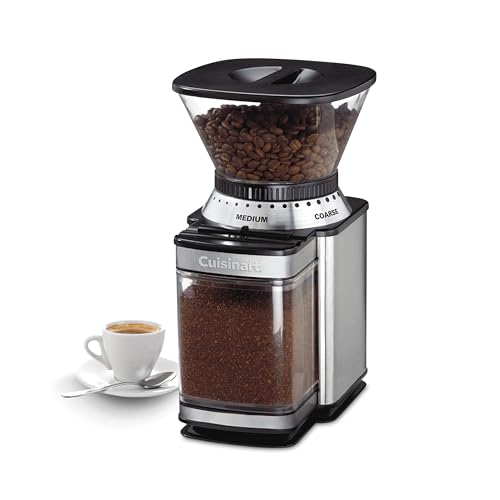


Why Maintenance-First Design Matters More Than Dial Marks
A grinder can look impressive on a counter and still produce inconsistent coffee if old particles remain trapped in the grind path. A dirty grinder is an overlooked cause of bad-tasting coffee because old grounds and oils can lodge between burrs and in chutes. That residue can make espresso shots taste dull, pour-over cups taste uneven, and cold brew concentrate develop a heavy, off note that no amount of fresh beans can fully correct.
Espresso is especially sensitive because it requires the finest grind, since water passes through the puck under high pressure in mere seconds. If stale fines remain in the chute or burr assembly, they can alter shot time and create a sour, bitter, or ashy finish before the milk even arrives. For manual espresso makers, the effect can be even more obvious because small batches magnify every bit of retained fines.
The goal is not just cleanliness for its own sake. Clean burrs and chutes support grind consistency, which is the foundation of extraction quality. When particle size is stable from one dose to the next, you can taste the actual coffee: bright fruit notes, clean sweetness, or a rounder body, rather than the metallic or rancid edge that old residue can introduce.
Choose Burr Geometry and Materials That Clean Without Re-Alignment
Burr grinders offer superior grind control because the gap between the burrs determines particle size with precision. That precision is only useful if the burr assembly can be maintained without shifting the calibration. For easier maintenance, prioritize grinders whose manuals specify removable hoppers, burr carriers, or adjustment rings that can be cleaned without damaging alignment. If cleaning the burr area means re-tuning the whole machine, the grinder becomes harder to use consistently.
Build materials matter as much as burr shape. Stainless steel or coated burrs that resist oil buildup, non-porous surfaces, and a sealed or wipeable motor area make daily care simpler. A grinder with a smooth, accessible chute is easier to keep free of static fines, which is important when you are switching between espresso, pour-over, and cold brew. A rough or hidden chute can hold oils and fines even when the hopper looks clean.
Value comes from reliability over time, not just initial performance. A grinder that is easy to clean can maintain flavor clarity, grind consistency, and burr longevity with less effort. If the design makes maintenance quick, you are more likely to keep the machine in a state where it produces a clean, repeatable cup instead of a compromised one.
Look for Accessible Hoppers, Chutes, and Burrs That Make Quick Care Real
Regular grinder maintenance can take less than 10 minutes and can improve flavor clarity, grind consistency, and burr longevity, according to Coffee Bumper. That kind of routine is only realistic if the grinder is designed for it. A removable hopper lets you empty beans and wipe the interior without exposing the burr assembly to unnecessary handling. A removable or accessible chute lets you remove loose fines before they settle into the next dose.
Coffee Bumper also notes that rancid coffee oil residue can coat burr surfaces and grind chutes within 3 to 7 days of regular use. That is why a grinder with easy access to the burr zone is more important than a grinder with a flashy display. If you are brewing espresso daily, the oil load is higher, and the need for quick cleaning is greater. If you are also using a milk frother or steam wand, a clean grinder helps keep the espresso base from tasting flat before it is combined with milk.
Coffee Bumper reports that a Journal of Agricultural and Food Chemistry study found that volatile off-flavor compounds become measurable within 48 hours at room temperature after grinding. That does not mean every grinder must be cleaned after every use, but it does mean that stale grounds should not sit in the grind path for long. A maintenance-friendly design makes it easier to purge, brush, and wipe the machine before those compounds become part of your next cup.
Match Grind Range and Retention to Espresso, Pour-Over, and Cold Brew
A maintenance-friendly grinder should also match the brewing methods you actually use. Espresso requires the finest grind because water passes through under high pressure in mere seconds, so the grinder needs precise control at the fine end. Pour-over methods such as Chemex or V60 are associated with medium-coarse grinds because water flows through more gradually by gravity. French press brewing is associated with coarse grounds that are less likely to slip through the metal filter or make the cup muddy during a four-minute steep, a timeline Spero Magazine describes as about four minutes.
Cold brew is associated with extra-coarse grinds to help prevent over-extraction during a 12 to 24 hour brewing process, also according to Spero Magazine. If your grinder has a narrow range, you may end up compromising at one end: too coarse for espresso, too fine for cold brew, or unable to reach a stable pour-over setting. A wide, predictable range makes it easier to keep each method in its proper extraction window without constantly re-tuning the machine.
Retention is another major maintenance factor. Low retention means fewer stale particles waiting to fall into the next dose. That matters for espresso, where a small amount of old fines can sour a shot, and for manual espresso makers, where the dose is small and every retained particle is more noticeable. It also matters for pour-over and cold brew, where a clean grind helps preserve clarity and prevents a muddy, over-extracted finish.
Build a Calibration Routine That Makes Dialing In Repeatable
Easy maintenance is not only about cleaning; it is about keeping the grinder stable enough that your settings mean something. Calibration is more reliable when you log each grind setting change and verify results with a precision scale and timer rather than relying only on dial marks or click positions. A grinder with a stable adjustment ring and a clear, repeatable range makes this routine easier. If the dial slips, drifts, or feels inconsistent, dialing in becomes guesswork and shot quality suffers.
For espresso, a small change in grind can shift shot time and taste quickly. A well-maintained grinder helps you distinguish between a true extraction problem and a maintenance problem. If the shot tastes sour, thin, or uneven, a quick check of the burr area and chute can tell you whether the issue is stale residue or a dialing-in error. For pour-over, the same stability helps you reproduce a clean, balanced cup instead of chasing a setting that changes every time you clean the machine.
Store beans in a sealed container away from light, and choose a grinder with a removable hopper that can be emptied and wiped rather than one that leaves beans sitting in a sealed chamber. That supports both coffee storage and grinder maintenance. When beans are fresh and the grind path is clean, you get a clearer picture of what the coffee actually tastes like, whether you are pulling espresso, brewing a V60, or making a cold brew concentrate.
Frequently Asked Questions
What makes a coffee grinder easier to maintain?
Look for a removable hopper, accessible burr carrier or adjustment ring, low retention, and a cleanable chute. The easier it is to reach the burr area and remove fines, the more likely the grinder will stay consistent over time.
Should I choose a conical or flat burr grinder for easier cleaning?
Neither shape is automatically easier to clean. What matters more is whether the burr assembly can be accessed and cleaned without disturbing alignment. A grinder with a removable burr carrier or adjustment ring is usually easier to maintain than one that requires full disassembly.
How often should I clean a grinder for espresso?
Espresso grinders benefit from frequent attention because they run at the finest settings and handle more oils. A quick dry purge, brush, and wipe of the chute can help prevent stale fines from affecting shot quality. A deeper clean of the burr area should be done often enough that residue does not build up between uses.
Does grinder maintenance affect pour-over and cold brew as much as espresso?
Yes. Pour-over and cold brew are less forgiving of muddy or uneven extraction. Old fines in the chute can make a V60 taste inconsistent and can make cold brew concentrate taste heavier or more over-extracted. A clean grind path helps preserve clarity in both methods.
What tools are best for maintaining a coffee grinder?
A small nylon or boar's-hair brush, microfiber cloth, and soft pick tools are useful for removing fines and wiping surfaces. Dry purging with dry grounds is a practical way to remove loose particles without introducing water to electronics.
Can a grinder with a removable hopper improve coffee storage?
It can. A removable hopper makes it easier to empty beans, wipe the interior, and keep the grinder from becoming a secondary storage container. Pairing it with a sealed bean container helps protect freshness and makes the grinder easier to clean.
The best grinder for easy maintenance in 2026 is the one that makes clean burrs, clean chutes, and stable calibration part of the routine rather than a chore. Choose accessible parts, low retention, durable materials, and a grind range that matches your espresso, pour-over, and cold brew needs. Start by auditing your current grinder: if cleaning requires guesswork or full disassembly, prioritize a model with removable components and a stable adjustment system, then build a simple log so every dialing-in change is repeatable.

