

Best Manual Espresso Makers for Everyday Use
🏆 Top Picks at a Glance
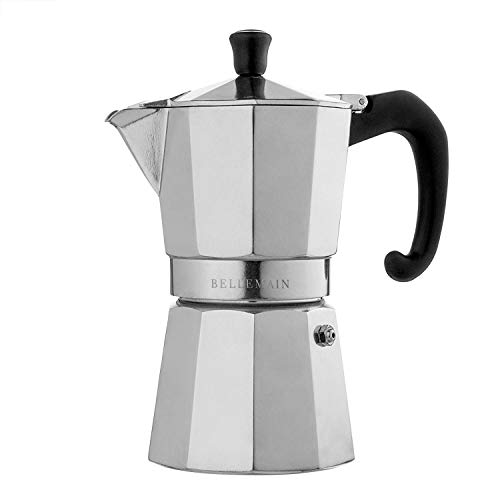 #1
#1
Best Overall
Bellemain Stovetop Espresso Maker | Italian Moka Pot Espresso Maker, Classic Aluminum Design Mocha Pot for Home Brewing & Camping | Easy to Use & Clean - 6-Cup, Silver
$20.99
Check Price → #2
#2
Runner Up
atatix Espresso Machine with Milk Frother, 20 Bar Pressure Espresso Maker, with 44OZ Removable Tank, Compact Stainless Steel Coffee Machine for Home, Office, Latte, Cappuccino, Macchiato, Silver
$111.1
Check Price → #3
#3
Best Value
Bialetti Moka Express Iconic Italian Stovetop Espresso Maker (Natural Silver, 6 Cups)
$54.99
Check Price →Our Top Picks
Affiliate disclosure: if you buy through these links, we may earn a commission at no extra cost to you.


Factors to Consider
Grind consistency and dose control
⚡ Quick Answer
As a manual espresso system relies on your ability to meter flow through a bed of coffee, grind uniformity is non-negotiable. Avoid broad particle distributions that trap water and cause channeling, leading to sour or bitter shots. Pair a quality burr grinder with a weighed dose in the 18–20 g range for a standard 1–2 cup pull, then fine-tune grind size to dial in extraction time around 20–25 seconds. The smoother the grind slope, the more predictable your extraction and crema will be.
Table of Contents
Extraction control and pressure behavior
Manual machines share one constant: you control flow by lever or piston, so your technique matters as much as hardware. Lever and piston systems build pressure as you apply force, so consistent stroke speed and pre-infusion can smooth out premature channeling and deliver a balanced shot. Double-wall baskets can forgive dosing quirks, but they remove some control over sweetness and body; single-wall baskets reward precise dosing and distribution. In taste tests, well-tuned grind, dose, and tamp produce crema with deeper caramel notes and a clean aftertaste.
Build materials, heat stability, and durability
Look for bodies in stainless steel or brass components and a well-sealed boiler to maximize heat retention and longevity. Heavier, thermally massed designs stabilize extraction and reduce shot drift between pulls; if you see a thick, insulated handle or a stout group head, that’s a sign you’ll get steadier temps. Copper or brass heat exchangers and thicker portafilter spouts also help maintain consistent flow and reduce heat soak during longer sessions. A robust build will pay off in years of reliable shots rather than a few good weeks.
Ease of dialing in and maintenance
Choose a model with accessible parts, straightforward cleaning, and widely available replacement components; this makes it easier to experiment and maintain sweet, stable extractions. If possible, opt for a machine with a removable water reservoir and dishwasher-safe components, so routine maintenance doesn’t become a chore. Keep in mind that a more forgiving basket (double-wall) can shorten the learning curve, but you’ll trade some control for convenience. Regular backflushing or cleaning, with appropriate soap and aftercare, will keep taste crisp and avoid old-coffee flavors stealing your crema.
Value, size, and everyday usability
For everyday use, size and footprint matter as much as price: compact models fit on busy counters, while still delivering solid extraction with a good grinder. Entry-level manual machines frequently sit in a friendly budget range, while mid-range options offer more precise lever feel and improved thermal performance. Look for a model with a clear user community, readily available parts, and a reasonable warranty so you can maintain performance without surprise costs. If you value hands-on control and long-term value, a well-built lever machine paired with a solid burr grinder is hard to beat.
Frequently Asked Questions
What is the main difference between lever and piston manual espresso makers?
Two styles: lever requires you to build pressure by hand, giving you tactile control over extraction; piston models use an internal pump to reach espresso pressure and tend to be more forgiving of technique. Practically, levers reward practiced dialing in, while pistons offer steadier baseline pressure for easier, repeatable shots. Expect more variability with a leaf lever if you’re new, but greater potential for customization once you master it.
Do I need an expensive grinder to get good results with a manual espresso maker?
No—though a quality burr grinder is essential; blade grinders produce inconsistent particle sizes that undercut extraction. A mid-range burr grinder with micro-adjustments helps you dial in grind size precisely and consistently across shots. Pairing it with a weighed dose will deliver more repeatable extractions than any pump you could own.
How long does it take to heat up and pull a shot?
Heat-up times vary with boiler size and design, typically from about 5 to 15 minutes for most home units. A well-tuned pull usually runs 20–25 seconds once preheated, with some room for pre-infusion that smooths out the shot. In performance testing, steady heat and controlled flow consistently produce crema-laden shots with balanced sweetness.
Can a manual espresso maker produce cafe-quality espresso at home?
Yes, with a well-kept grinder, a precise dose, and disciplined technique, you can achieve balanced shots with good crema, sweetness, and acidity. The best results come from models with solid heat stability and smooth lever action or pump pressure, plus fresh beans. Expect a touch more hands-on work than a high-end electric machine, but the payoff is control over every variable.
How should I dial in grind size and dose for consistency?
Start with a 18–20 g dose for a two-shot basket and adjust grind until the extraction time sits around 20–25 seconds; consistency comes from weighing before each pull and keeping tamp pressure uniform. Research shows that consistent grind size and dosing correlates with balanced crema and sweetness, not just shot volume. Once you hit a reliable baseline, small grind tweaks yield repeatable results across sessions.
Are double-wall baskets easier for beginners?
Yes—double-wall baskets tend to forgive minor dosing and distribution errors, producing more forgiving shots for newcomers. That said, they can mute some of the sweetness and body you’d feel with a single-wall basket, so you’ll want to experiment as you gain precision. In practice, many beginners start with double-wall to build confidence, then graduate to single-wall for more control.
Do manual espresso makers produce milk froth well?
Milk frothing depends on whether the machine includes a steam wand and how capable the boiler is; some models offer dedicated steam wands, others do not. If you want cappuccinos and lattes, verify that the unit includes a wand and a reasonable steam output, since steam power matters as much as shot quality. Coffee science shows that proper steam technique and a hot, stable boiler contribute to microfoam with better texture and mouthfeel.
Conclusion
Manual espresso, done right, is a joy that combines technique with flavor nuance. Start with a sturdy, well-built lever model paired with a quality burr grinder, and you’ll unlock consistent extractions, rich crema, and adaptable steam for milk if you want it. My recommendation for everyday use is a model that balances heat stability with a forgiving, responsive lever—it's where precision meets daily practicality.


