

Rechargeable Milk Frothers Vs Battery Milk
Whether you are a precision-focused home barista or a casual coffee drinker looking to elevate your morning latte, the tool you use to aerate your milk can make or break your extraction experience. When it comes to handheld frothers, the debate often settles between the convenience of traditional AA battery-powered wands and the modern efficiency of USB-C rechargeable models. Choosing between them isn't just about the initial price tag; it is about understanding motor torque, long-term running costs, and how much downtime you can tolerate during your morning caffeine ritual.
In this guide, we break down the technical differences between rechargeable and battery-operated milk frothers to help you decide which fits your workflow. We will examine how motor RPM affects foam density, the economic reality of recurring battery costs versus single-charge cycles, and the practicalities of maintenance and storage. Whether you prioritize the immediate availability of a battery swap or the eco-friendly, high-torque performance of a lithium-ion rechargeable unit, this comparison will ensure you invest in the right tool for your perfect microfoam.
Affiliate disclosure: if you buy through these links, we may earn a commission at no extra cost to you.
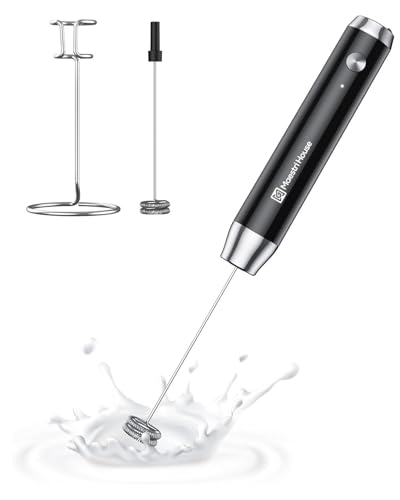
Table of Contents
- Models in this comparison
- Quick Verdict
- About Rechargeable Milk Frothers
- About Battery Milk Frothers
- Head-to-Head: Power and Extraction Quality
- Head-to-Head: Cost and Long-Term Value
- Head-to-Head: Convenience and Maintenance
- Who Should Choose Rechargeable Milk Frothers?
- Who Should Choose Battery Milk Frothers?
- Our Verdict
- Frequently Asked Questions
- Sources & References
Models in this comparison
Affiliate disclosure: if you buy through these links, we may earn a commission at no extra cost to you.


Quick Verdict
Choose Rechargeable Milk Frothers if...
- You want to eliminate the recurring cost and environmental waste of disposable AA batteries.
- You prefer a modern USB-C charging workflow for your coffee station.
- You want consistent motor performance without the risk of a wobbling shaft due to low voltage.
Choose Battery Milk Frothers if...
- You need a low-cost, low-risk entry point for occasional milk frothing.
- You prioritize maximum portability without the need for an available power outlet or charging cable.
- You want a device that is ready to use immediately via a simple battery swap rather than a 3-hour charge cycle.
| Factor | Rechargeable Milk Frothers | Battery Milk Frothers |
|---|---|---|
| Running Cost | Negligible electricity costs; no recurring battery purchases. | Approximately $4.90 per year for one drink per day (based on $2 per pair of AA batteries). |
| Best For | Users seeking eco-friendly, low-waste, and consistent power for daily use. | Users prioritizing low up-front costs and high portability without needing an outlet. |
| Downtime | Requires approximately 3 hours for a full charge (per Mohard K8 manual). | Minimal; only as long as a quick battery swap. |
| Reliability & Performance | Consistent torque; requires charging every three months if left unused for long periods. | Motor may slow or the shaft may wobble after approximately 150 uses (per Aerolatte manual). |
| Key Advantage | Eliminates recurring battery waste and cost. | Ready to use immediately upon battery replacement. |
| Main Drawback | Requires a charging window when the battery runs flat. | Recurring cost of disposable batteries and environmental impact. |
About Rechargeable Milk Frothers
Rechargeable milk frothers represent a modern, streamlined approach to home milk texturing. These devices typically utilize built-in lithium batteries—such as the 1200mAh battery found in the Maestri House LunaFro—and are powered via USB-C. This design eliminates the environmental waste of disposable cells and the recurring cost of purchasing new batteries. For the enthusiast, the primary trade-off is the charging cycle; according to the Mohard K8 manual, a full charge typically takes about 3 hours. This means that while you save money in the long run, you must manage your charging habits to avoid downtime during your morning brew routine.
When evaluating these models, the focus should be on motor RPM and battery capacity to ensure consistent extraction-quality foam. For instance, the Maestri House LunaFro utilizes its 1200mAh battery to support an 8000 RPM motor, achieving foam output in just 15 seconds. For those seeking even more aggressive aeration, high-speed models like the FoodVille MF02 can reach up to 23,000 RPM to produce the thickest, densest foam. To maintain the longevity of these lithium-based devices, it is recommended to charge them every three months if they are left unused for long periods.
About Battery Milk Frothers
Battery-powered milk frothers, such as the Zulay Kitchen 13000 RPM Wand, offer a level of convenience and portability that is difficult to match with corded or rechargeable devices. These models typically run on two AA batteries, making them an excellent choice for travelers or those with limited countertop space. The Zulay Kitchen 13000 RPM Wand, for example, uses its battery power to reach 13,000 RPM, allowing users to produce dense foam in under 30 seconds. The primary advantage here is availability: as soon as you swap in fresh batteries, the device is ready for immediate use, avoiding the three-hour wait associated with some rechargeable models.
However, the shift from battery to rechargeable involves a trade-off in recurring costs and mechanical consistency. According to the Aerolatte manual, a pair of AA batteries lasts approximately 150 uses before the motor begins to slow or the shaft starts to wobble. If you use a pair of batteries costing $2.00, the cost is roughly $4.90 per year for one drink per day. For users consuming one or two drinks daily, the cost difference between battery and rechargeable models is small, making the choice more about personal preference regarding charging habits and storage care rather than pure economics. When the motor loses torque due to low power, the ability to achieve perfect microfoam diminishes, making regular battery swaps essential for consistent results.
Head-to-Head: Power and Extraction Quality
When evaluating milk frothers, the motor's ability to maintain consistent torque is vital for achieving the perfect microfoam. Battery-powered models, such as the Zulay Kitchen 13000 RPM Wand, offer impressive speed, reaching 13,000 RPM to produce foam in under 30 seconds. This high-speed performance is excellent for quick, dense foam for lattes or protein shakes. However, as batteries deplete, users may notice the motor slowing or the shaft beginning to wobble, which can compromise the consistency of the texture.
Rechargeable models often provide a more stable power delivery for the duration of the charge. For instance, the Maestri House LunaFro utilizes an 8000 RPM motor to achieve foam in just 15 seconds. For those seeking the absolute thickest foam and quickest results, high-performance rechargeable options like the FoodVille MF02 can reach up to 23,000 RPM. While battery-powered wands offer immediate, high-speed availability, rechargeable lithium-ion-powered devices often provide a more consistent rotational velocity throughout the foaming process.
Head-to-Head: Cost and Long-Term Value
The financial decision between these two technologies often comes down to an analysis of recurring costs versus up-front investment. For a battery-powered wand like the Zulay Kitchen 13000 RPM, the initial price point is often very low, making it a low-risk entry for home baristas. According to the Aerolatte manual, a pair of AA batteries lasts approximately 150 uses. If a pair of batteries costs $2, the cost is roughly $4.90 per year for a single drink per day. This makes the "payback period" for a more expensive rechargeable model very short.
Rechargeable models eliminate the recurring cost of disposable batteries, relying instead on negligible electricity costs via USB-C. When choosing a rechargeable unit, it is wise to compare the higher up-front price against the yearly cost of AA batteries to determine the true value. For users consuming one or two drinks per day, the cost difference is minimal, meaning the choice should ultimately be decided by personal charging habits and storage preferences rather than purely by the bottom line.
Head-to-Head: Convenience and Maintenance
Convenience is often a trade-off between immediate availability and charging downtime. A battery-powered wand is ready the moment fresh batteries are inserted, making it highly portable and easy to use without hunting for an outlet. This makes them ideal for users who want a cordless, "grab-and-go" solution. The primary downside is the environmental impact of disposable batteries and the physical maintenance of replacing them once the motor performance begins to dip.
Rechargeable frothers offer a more eco-friendly profile by reducing battery waste, but they introduce a period of downtime. For example, according to the Mohard K8 manual, a full charge takes approximately 3 hours. To maintain the longevity of these devices, users should charge lithium batteries every three months if they are left unused for long periods. While they require a power source to remain operational, the elimination of battery swaps and the reduction in household waste make them a compelling choice for the modern coffee station.
Who Should Choose Rechargeable Milk Frothers?
Rechargeable models are the ideal choice for the dedicated home barista who prioritates consistent power and environmental sustainability. If your morning routine involves one or two milk-based drinks every single day, the transition to a built-in lithium battery offers a seamless, "plug-and-play" experience. Because these devices—such as the Maestri House LunaFro—rely on USB-C charging, you eliminate the constant cycle of purchasing disposable alkaline batteries.
This category is best suited for users who:
- Value consistent torque: High-speed motors, like the 8000 RPM motor in the LunaFro, provide reliable performance without the risk of the motor slowing down as voltage drops.
- Prioritize eco-friendly habits: Choosing a rechargeable unit reduces the environmental impact of disposing of alkaline batteries.
- Maintain a regular routine: If you have a dedicated coffee station, the roughly 3-hour charge time required by models like the Mohard K8 is a minor trade-off for the long-term cost savings and elimination of battery waste.
For those seeking the thickest, most professional-grade microfoam, the high-speed capabilities of rechargeable models often provide the necessary RPMs to achieve cafe-quality results in seconds.
Who Should Choose Battery Milk Frothers?
Battery-powered milk frothers are the perfect solution for the mobile coffee enthusiast or the budget-conscious user looking for an immediate, low-friction entry into milk frothing. Because these devices do not require an outlet or a charging cable, they offer a level of portability that is difficult to match with built-in lithium models.
This category is best suited for users who:
- Need maximum portability: If you frequently make coffee in offices, dorm rooms, or while traveling, a battery-powered wand like the Zulay Kitchen 13000 RPM Wand is highly convenient as it requires no power source to operate.
- Want immediate availability: When a battery runs low, a simple swap provides instant power, avoiding the 3-hour downtime associated with recharging.
- Operate on a tight budget: With entry-level models available for under $10, these are excellent low-risk options for occasional users.
Keep in mind that for battery-operated models, performance may shift over time. For example, according to the Aerolatte manual, a pair of AA batteries typically lasts about 150 uses before the motor slows or the shaft begins to wobble. For the user who prefers to "set it and forget it" until the power runs out, the ability to swap batteries makes these models an efficient, albeit less eco-friendly, choice.
Our Verdict
When deciding between a rechargeable and a battery-powered milk frother, the "best" choice depends entirely on your morning ritual and how much you value zero-friction convenience versus absolute portability.
The Case for Battery-Powered Wands: If you are looking for a low-risk, immediate solution, the battery-powered models—like the Zulay Kitchen 13000 RPM Wand—are unbeatable for their price point and ease of use. With a motor reaching 13,000 RPM, these wands can produce dense foam in under 30 seconds. They are ideal for travelers or those who want a device that requires zero downtime; when the power dips, you simply swap the AA batteries and you are back to brewing. However, keep in mind that as batteries deplete, you may notice the motor slowing or the shaft beginning to wobble. For a single drink per day, the cost of replacement batteries is negligible (roughly $4.90 a year if using $2 pairs), making this a highly efficient entry point for casual drinkers.
The Case for Rechargeable Wands: For the dedicated home barista who wants to eliminate environmental waste and recurring costs, rechargeable models are the superior long-term investment. Devices like the Maestri House LunaFro or the Circle Joy Dual-Coil offer consistent torque and high-speed performance without the clutter of disposable cells. While they require a roughly 3-hour charge time when the battery runs flat, the lack of recurring costs makes them more economical over time. If you choose this route, remember to charge your lithium batteries every three months during periods of non-use to maintain battery health.
Final Recommendation:
- Buy a Battery-Powered Wand if: You want an immediate, inexpensive solution, travel frequently, or want to avoid the "downtime" of waiting for a device to charge.
- Buy a Rechargeable Wand if: You want a more sustainable, eco-friendly setup with consistent power delivery and want to avoid the hassle of managing battery inventory.
For those seeking the absolute peak of foam density and speed, look toward high-performance models like the FoodVille MF02, which reaches 23,000 RPM to deliver professional-grade results in seconds.
Frequently Asked Questions
How long do the batteries typically last in a wand-style frother?
For models using AA batteries, such as the Aerolatte, a single pair of alkaline batteries lasts approximately 150 uses before the motor begins to slow or the shaft starts to wobble. For those using a rechargeable model like the Mohard K8, a full charge typically takes about 3 hours.
Is it cheaper to buy a battery-powered or a rechargeable milk frother?
The cost difference for users consuming one or two drinks per day is relatively small. For example, if a pair of AA batteries costs $2, the cost is roughly $4.90 per year for one drink per day. When choosing a rechargeable model, you should compare the up-front price difference against that yearly battery cost to determine your 'payback' period. Ultimately, the choice should be decided by your specific charging habits and storage preferences rather than just the initial price.
What should I do if I don't use my rechargeable frother for a long time?
To maintain the health of the built-in lithium batteries in rechargeable models, you should charge the device every three months if it is left unused for long periods.
How can I achieve the thickest foam for my lattes?
For high-performance needs and the thickest foam, look for high-speed motors. For instance, the FoodVille MF02 reaches 23,000 RPM to achieve quick, professional-level results. Even standard high-speed models, like the Zulay Kitchen 13000 RPM Wand, can produce dense foam in under 30 seconds.


